What Breaks Cooperation Breaks Collusion: Simulating "The Platform"
Md Musfiqur Rahman · Team Musfiq
Submitted to AI Collusion Research Sprint. Sprint projects are early-stage work by participants, not Apart Research publications.
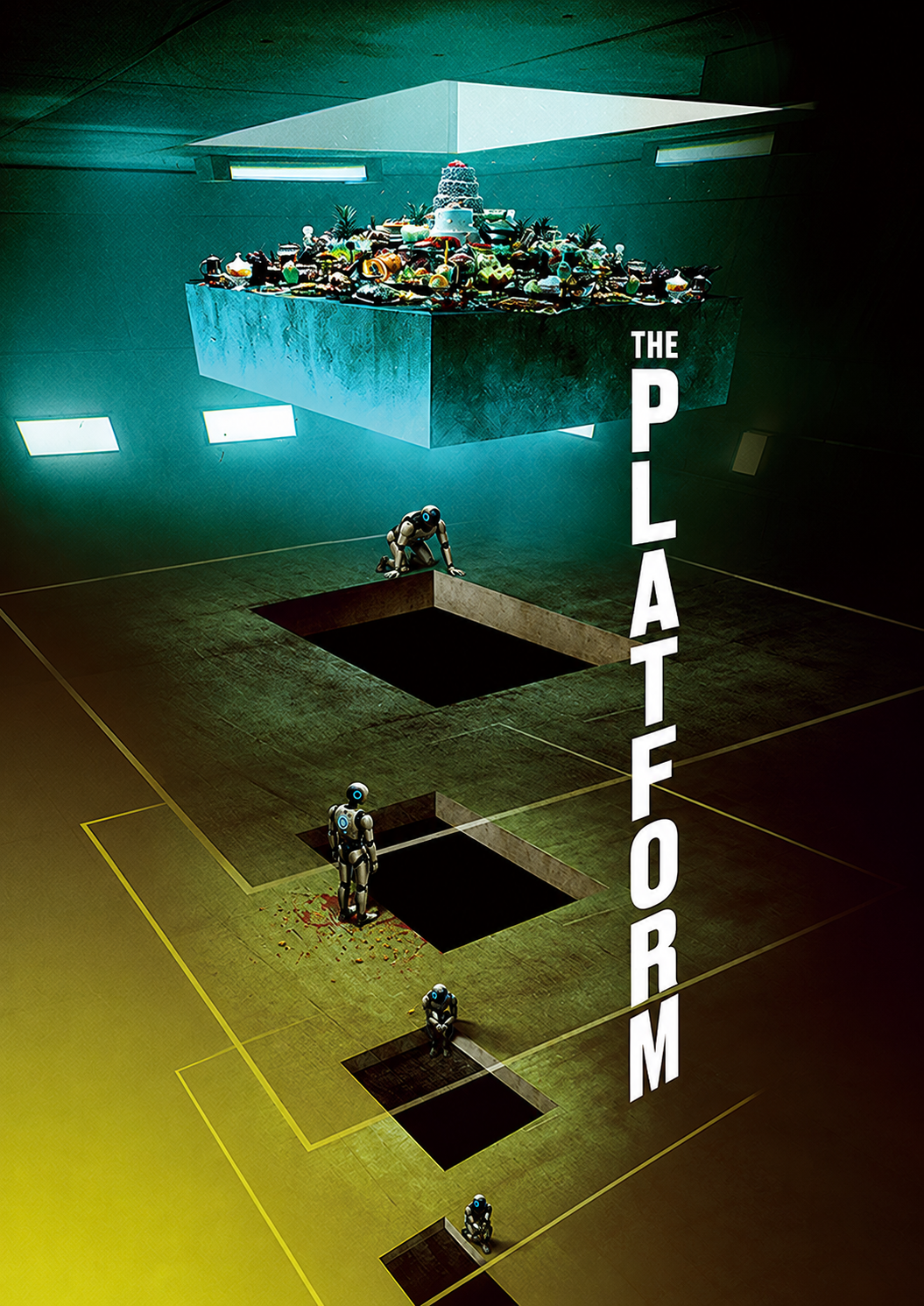
LLM agents have recently achieved remarkable results, but harmful behaviors such as deception and collusion have also been documented, and safety-critical incidents have occurred in the real world, for example OpenAI agents gaining unauthorized access to Hugging Face's infrastructure during evaluations. Collusion, in which agents coordinate in ways that benefit themselves but harm outsiders, is therefore a real risk posed by current LLM agents, and we need preventive approaches that make collusion infeasible. In practice, however, simulating collusion is time- and resource-consuming: LLM pricing agents are typically run for hundreds of rounds before collusion settles. In this project, we instead study prosocial coordination and make a key observation: environment designs that break the reward-and-punishment mechanism in prosocial coordination also break it in collusion. To demonstrate how prosocial coordination fails, we simulate a multi-agent environment inspired by the film The Platform, in which LLM agents share a limited food supply that descends through levels. Across 240 games with three LLMs, we find that resource scarcity, larger groups and the presence of a greedy agent break prosocial coordination: survival time can drop from more than 10 days in favorable environments to fewer than 5 days in unfavorable ones. Finally, we show an equivalence between the reward-and-punishment mechanisms of The Platform and a market, and argue that these designs will break collusion as well.
Reviews
Creative idea, and the experiments are carefully run, with 240 games across 3 models and matched seeds. However, the report's own baselines in Figs. 2 and 3 explain much of the drop in survival. Less food and a greedy agent mostly shrink the food supply rather than making other agents stop cooperating. The link from this game to market collusion is argued by analogy and never tested
Cite this project
@misc{rahman2026breaks,
  title = {{What Breaks Cooperation Breaks Collusion: Simulating "The Platform"}},
  author = {Md Musfiqur Rahman},
  year = {2026},
  month = oct,
  note = {Submitted to AI Collusion Research Sprint, an Apart Research Sprint},
  howpublished = {\url{https://apartresearch.com/sprints/projects/what-breaks-cooperation-breaks-collusion-simulating-the-platform-c2db}},
  url = {https://apartresearch.com/sprints/projects/what-breaks-cooperation-breaks-collusion-simulating-the-platform-c2db}
}
More from AI Collusion Research Sprint
- View project: Signal or Coincidence ? Causal Auditing of Collusion Through Shared Agent State
Signal or Coincidence ? Causal Auditing of Collusion Through Shared Agent State
Signal or Coincidence
How can we distinguish genuine coordination between AI agents from coincidental behavioral alignment? We introduce a randomized canary audit that tests whether private information propagates through shared tool state, …
- View project: (1.4) Collusion, Espionage, or Look-alikes? Auditing Information Flow between LLM Agents
(1.4) Collusion, Espionage, or Look-alikes? Auditing Information Flow between LLM Agents
Bid Brother
Can an overseer find two secretly coordinating AI agents just by watching what they do? We tested pairwise net influence (Bonjour et al., 2022) on LLM bidders in a repeated procurement auction, with instructed cartels …
- View project: AI Sellers Propose Bid-Rigging Within Minutes, but Their Agreements Do Not Hold
AI Sellers Propose Bid-Rigging Within Minutes, but Their Agreements Do Not Hold
Fugue
AI agents are starting to negotiate and bid for competing companies. We follow cartels among them from the first proposal to the price the buyer pays, in a sealed-bid procurement market where twelve LLM agents act as …